Why Degreasing Has Become a Strategic Decision
In modern manufacturing and processing environments, the cleanliness of a component directly affects:
- Product quality
- Coating adhesion
- Assembly performance
- Equipment lifespan
- Compliance standards
What has changed over the last decade is not just the importance of cleaning—but the pressure surrounding it.


Across the UK and global markets, businesses are now facing increasing demands to:
- Reduce environmental impact
- Eliminate hazardous substances
- Improve operator safety
- Lower operating costs
- Increase throughput
These pressures are forcing a fundamental reassessment of how degreasing is carried out.
At Rotajet, this is where most projects now begin—not with a machine request, but with a process review.
The Transition Away from Solvent Degreasing Systems
For decades, solvent degreasing was considered the benchmark for industrial cleaning. Its ability to dissolve oils and contaminants made it highly effective across a range of applications.
However, the environment around solvent cleaning has changed significantly.
The combination of:
- Rising chemical costs
- Increasing disposal requirements
- Tightening environmental regulations
- Greater focus on workplace safety
has made solvent systems progressively more difficult to justify in many industrial settings.
At the same time, aqueous degreasing technology has evolved. What was once seen as a lower-performance alternative is now a fully engineered process capable of handling demanding applications at scale.
Rotajet has seen a clear increase in demand from companies actively replacing solvent systems—not because they want to, but because operational and regulatory pressures leave little alternative.
Understanding the Two Cleaning Methods
To understand why this transition is happening, it is important to recognise that solvent and aqueous degreasing operate on completely different principles.
Solvent Degreasing — Dissolving Contamination

Solvent systems remove contamination by breaking down oils and greases chemically. The solvent interacts with the contamination, dissolving it and separating it from the component surface.
One of the most widely used approaches is vapour degreasing, where heated solvent vapour condenses onto cooler components and carries contamination away.
This method is highly effective in controlled environments, particularly for precision components. However, it relies heavily on stable conditions to maintain performance.
Aqueous Degreasing — Controlled Process Cleaning
Aqueous systems operate differently. Instead of relying on a single mechanism, they combine multiple variables into a controlled cleaning process.
These typically include:
- Heated water-based detergents
- Mechanical spray impact
- Controlled cycle timing
- Filtration and recirculation
The result is a system that can be adjusted and optimised based on the application.
This is where Rotajet systems are fundamentally different. Rather than supplying standalone equipment, Rotajet designs degreasing systems around the process—ensuring consistent performance across varying production conditions.
No Longer a Simple Choice
Historically, the decision between solvent and aqueous cleaning was based on performance alone.
Today, that is no longer the case.
Modern businesses must consider:
- Total operating cost
- Environmental compliance
- Process reliability
- Integration into production
- Scalability for future growth
This transforms the decision from a technical comparison into a strategic one.
Where Most Systems Fail
A common mistake in industrial degreasing is assuming that cleaning performance is determined by the machine alone.
In reality, performance depends on:
- The correct combination of heat, chemistry, and mechanical action
- Proper system sizing
- Effective filtration
- Process control
Without these elements, even the most advanced equipment will underperform.
This is why Rotajet focuses on engineered solutions—ensuring that the entire cleaning process is designed, not just the equipment.
Introducing Modern Aqueous Degreasing Systems
Modern aqueous degreasing systems are designed to deliver:
- Consistent cleaning performance
- Controlled operating conditions
- Reduced chemical usage
- Lower environmental impact
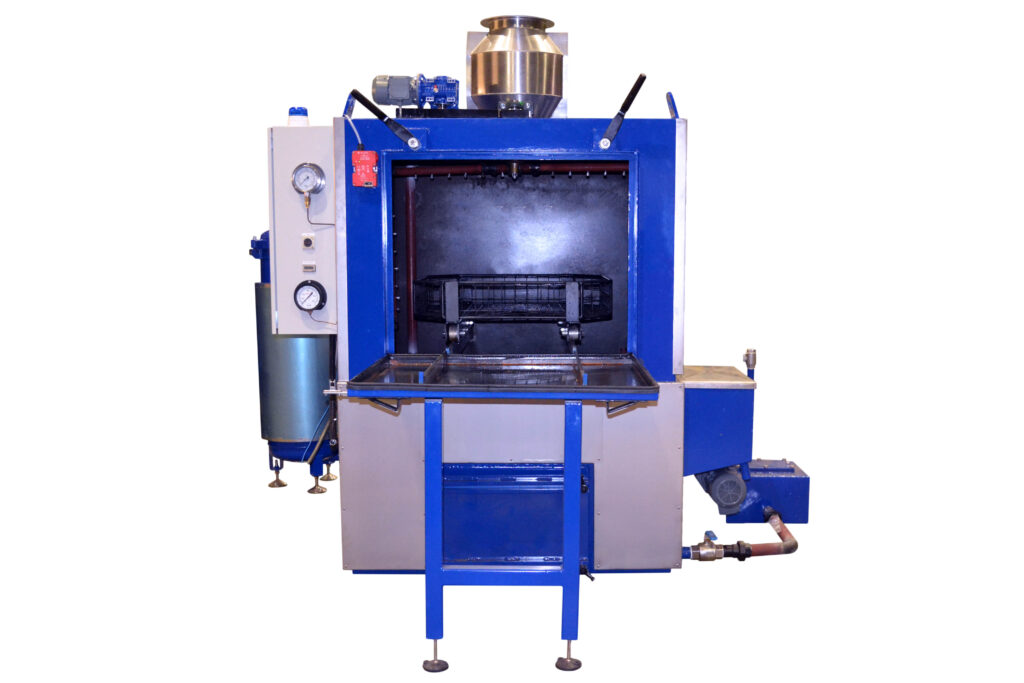
Systems such as the Rotajet D60 Industrial Parts Washer are built to provide controlled cleaning cycles using heated detergent solutions and recirculated wash systems.
For higher throughput or larger components, systems like the Rotajet D80 Industrial Parts Washer and Rotajet D108 Industrial Parts Washer extend this capability into multi-stage and production-integrated solutions.
These systems are not standalone machines—they form part of a wider engineered process.
The Direction of the Industry
The trend is clear.
Aqueous degreasing is becoming the standard approach for most industrial applications, while solvent systems are increasingly limited to niche use cases.
However, transitioning from one system to another is not simply a case of replacing equipment.
The success of any degreasing process depends on selecting and designing the correct system for the application.
What Comes Next
Understanding the difference between these two approaches is only the first step.
The real question is:
How do they perform in real-world conditions, and what do they actually cost to operate?
How Cleaning Performance Is Measured in Practice
In real industrial environments, cleaning performance is not judged by theory or laboratory conditions. It is judged by consistency under pressure.
A system is only effective if it can deliver the same cleaning standard across:
- Changing contamination levels
- Different component geometries
- Continuous production cycles
- Multiple operators and shifts
This is where many traditional approaches begin to show limitations.
Solvent systems are highly effective when conditions remain stable. However, as contamination levels increase or vary throughout the day, performance can become less predictable unless the solvent is tightly controlled and frequently replaced.
Aqueous systems approach this differently. By combining heat, chemistry, and mechanical action, they create a process that can absorb variation without compromising output quality. This is particularly important in modern manufacturing, where production rarely operates under fixed conditions.
Handling Variation in Real Production Environments
One of the biggest challenges in degreasing is not removing contamination—it is maintaining performance when conditions change.
In practice:
- Oil load increases over time
- Parts arrive with inconsistent contamination
- Production speeds fluctuate
- Operators adjust processes
A system that relies on a single cleaning mechanism will struggle under these conditions.
Aqueous systems, particularly those designed as full processes rather than standalone machines, are built to manage this variation. Through controlled temperature, detergent concentration, and spray pressure, performance can be maintained even as input conditions change.
This is why Rotajet systems are engineered around process stability. The aim is not just to clean parts, but to ensure that cleaning performance is repeatable across the entire production cycle.
Throughput and the Role of Process Flow
Cleaning performance alone is not enough. In most facilities, degreasing must operate in line with production—not as a separate activity.
Solvent systems are often used in batch processes, where parts are cleaned in stages and then moved manually or semi-manually through the workflow. While effective, this can introduce delays and limit scalability.
Aqueous systems are far more adaptable to continuous production environments.
Machines such as the Rotajet D60 Industrial Parts Washer can operate as standalone batch units, while larger systems like the Rotajet D80 Industrial Parts Washer and Rotajet D108 Industrial Parts Washer can be configured as part of a continuous or semi-continuous process.
This allows degreasing to be integrated into:
- Production lines
- Conveyor systems
- Automated handling systems
The result is a process that supports production rather than interrupting it.
Reducing Labour and Manual Handling
One of the most immediate impacts of moving to an engineered aqueous system is the reduction in manual intervention.
Batch-based solvent systems often require:
- Manual loading and unloading
- Operator monitoring
- Handling between stages
In contrast, integrated aqueous systems can automate much of this process.
By designing the system around the workflow, Rotajet enables:
- Reduced handling time
- Lower labour requirements
- Improved operator safety
- More consistent processing
This has a direct impact on operating costs, particularly in high-throughput environments.
Understanding Total Cost of Ownership
The most common mistake in comparing degreasing systems is focusing on initial purchase cost.
The more accurate comparison is total cost of ownership over time.
Where Solvent Systems Accumulate Cost
Solvent-based cleaning introduces ongoing operational costs that continue throughout the life of the system.
These include:
- Regular solvent replacement
- Losses through evaporation
- Hazardous waste disposal
- Environmental compliance monitoring
- Ventilation and safety systems
Individually, these costs may seem manageable. Over time, they accumulate into a significant operational expense.
How Aqueous Systems Change the Cost Structure
Aqueous systems shift the cost profile from continuous chemical consumption to controlled process operation.
Instead of regularly replacing cleaning media, aqueous systems use:
- Recirculated wash solutions
- Integrated filtration
- Controlled chemical dosing
- Energy-efficient heating
This allows the system to maintain performance without constant input of new materials.
Rotajet systems are designed to optimise this balance—minimising water, chemical, and energy usage while maintaining cleaning performance.
Where the Financial Advantage Becomes Clear
In many projects, the financial advantage of aqueous degreasing becomes clear within the first year of operation.
This is driven by:
- Reduced chemical consumption
- Lower disposal costs
- Reduced labour input
- Improved throughput
- Less rework due to consistent cleaning
While the initial investment in equipment may be higher than basic solvent systems, the ongoing savings typically outweigh this within a relatively short period.
Energy and Water Efficiency in Modern Systems
Efficiency is not just about cost—it is also about sustainability and long-term viability.
Modern aqueous systems are designed to retain and reuse both heat and water.
For example:
- Wash solutions are recirculated
- Heat is retained within the system
- Rinse water can be managed through overflow systems
- Filtration removes contaminants without replacing the entire solution
This reduces both operating cost and environmental impact.
In well-designed systems, fresh water usage per cycle can be minimal, with most of the process operating in a closed or semi-closed loop.
Environmental and Compliance Considerations
Environmental compliance is becoming one of the defining factors in degreasing system selection.
Solvent systems are increasingly subject to restrictions related to emissions, handling, and disposal. This introduces both cost and complexity.
Aqueous systems, by contrast, are easier to manage within modern environmental frameworks.
They offer:
- Reduced emissions
- Lower hazardous waste output
- Greater control over discharge
- Compatibility with effluent treatment systems
Rotajet systems can be designed to integrate with site-specific environmental controls, ensuring compliance without compromising performance.
The Importance of System Design in Cost and Performance
The performance and cost efficiency of any degreasing system depend heavily on how it is designed.
Common issues arise when:
- Systems are undersized for throughput
- Filtration is not properly integrated
- Chemistry is not matched to contamination
- Process flow is not considered
These issues lead to increased operating costs and inconsistent performance.
Rotajet addresses this by designing systems based on:
- Application requirements
- Throughput targets
- Site constraints
- Utility availability
This ensures that the system performs as intended from day one.
What This Means for Decision Makers
By this stage, the comparison between aqueous and solvent degreasing becomes clearer.
The decision is not simply about cleaning effectiveness.
It is about:
- Long-term cost
- Process reliability
- Integration into production
- Environmental responsibility
For most industrial applications, aqueous systems provide a more sustainable and scalable solution.
Choosing the Right Commercial Approach: Buy • Rent • Contract
Once the technical direction is clear, the next decision is how the system is implemented commercially. This has a direct impact on cash flow, risk, and project speed.
Rotajet typically supports three structured approaches, each aligned to different operational needs.
Buying a System — Long-Term Control
Purchasing a system is the preferred route for businesses where degreasing is a permanent part of production.
Owning equipment such as the Rotajet D60 Industrial Parts Washer, Rotajet D80 Industrial Parts Washer, or Rotajet D108 Industrial Parts Washer allows full integration into the production environment.
This approach is typically chosen where:
- Throughput is consistent or growing
- Cleaning is business-critical
- Long-term operating cost reduction is a priority
Ownership also allows systems to be engineered fully around the site layout, utilities, and workflow.
Rental — Speed and Flexibility
Rental is increasingly being used as a strategic option rather than a temporary one.
It allows businesses to:
- Implement a system quickly
- Avoid upfront capital expenditure
- Validate performance under real production conditions
- Scale operations without long-term commitment
This is particularly useful when replacing solvent systems, where businesses want to confirm performance and cost savings before committing to a full capital purchase.
Contract Degreasing Solutions
For some operations, the priority is not ownership, but performance and predictability.
A contract solution allows Rotajet to supply and support the system while the customer focuses on production.
This model provides:
- Fixed, predictable costs
- Ongoing support and maintenance
- Performance assurance
- Reduced internal resource requirement
It is particularly suited to high-volume or multi-site operations where consistency is critical.
Specifying the Right System
Selecting the correct degreasing system is not about choosing a machine—it is about defining the process requirements.
The most successful projects begin with a clear understanding of:
- Type and level of contamination
- Required cleanliness standard
- Throughput targets
- Component size and geometry
- Available utilities (power, water, air)
- Space and layout constraints
From this, the system can be designed to deliver consistent performance.
Matching Equipment to Application
Different applications require different system configurations.
For example:
- Smaller batch cleaning → Rotajet D60 Industrial Parts Washer
- Medium throughput production → Rotajet D80 Industrial Parts Washer
- Large components or high-volume processing → Rotajet D108 Industrial Parts Washer
However, most real-world systems involve multiple stages, including washing, rinsing, filtration, and drying.
Why Testing and Validation Are Critical
One of the biggest risks in degreasing projects is implementing a system that has not been proven on the actual contamination.
At Rotajet’s Wakefield facility, systems can be tested using real materials to:
- Confirm cleaning performance
- Validate cycle times
- Optimise process parameters
- Reduce risk before installation
This ensures that the final system performs as expected from day one.
Where the Industry Is Going
The move toward aqueous degreasing is not a trend—it is a structural shift.
While solvent systems still exist in niche applications, the majority of industrial operations are moving toward:
- Controlled, repeatable processes
- Lower operating costs
- Reduced environmental impact
- Scalable production systems
The decision is no longer about comparing two technologies.
It is about selecting the right process for long-term performance.
Start Your Process Review
If you are:
- Replacing a solvent system
- Scaling production
- Reducing operating costs
- Improving cleaning consistency
Rotajet can support with:
- Process design
- Trials and validation
- System supply
- Rental or contract options
FAQs
1. How do I know if I should replace my solvent degreasing system?
The decision to replace a solvent degreasing system is rarely driven by a single issue. It is usually the result of multiple pressures building over time.
Common indicators include rising solvent consumption, increasing disposal costs, stricter environmental or safety requirements, and inconsistent cleaning performance as contamination levels fluctuate.
Many businesses initially tolerate these issues because the system “still works.” However, when analysed properly, the total cost of operating a solvent system—particularly when including compliance, labour, and chemical losses—often exceeds expectations.
A structured process review is the best starting point. This involves assessing current operating costs, throughput requirements, and cleaning standards. In many cases, businesses find that an aqueous system can deliver the same or improved performance with significantly lower ongoing costs.
Rotajet typically supports this transition by evaluating the application and, where required, carrying out trials to demonstrate performance before any investment decision is made.
2. What level of cleaning can an aqueous system realistically achieve?
Modern aqueous degreasing systems are capable of achieving very high levels of cleanliness, including oil-free and residue-free finishes suitable for most industrial applications.
The key to this performance is not a single factor, but the combination of heat, chemistry, mechanical action, and process control. By adjusting these variables, the system can be optimised to match the specific contamination and material.
For example, heavier oils may require higher temperatures and stronger detergents, while precision components may require multi-stage washing and rinsing.
Systems such as the Rotajet D80 Industrial Parts Washer are designed to maintain these conditions consistently, ensuring repeatable results across production cycles.
In most cases, aqueous systems now match or exceed solvent performance, particularly when consistency and scalability are considered.
3. What are the biggest mistakes when specifying a degreasing system?
One of the most common mistakes is selecting a system based on price or basic specification rather than process requirements.
This often leads to systems that are undersized, lack proper filtration, or are not matched to the contamination type. As a result, performance becomes inconsistent, and operating costs increase over time.
Another common issue is failing to consider integration into production. A system that cleans effectively but disrupts workflow can reduce overall efficiency.
A third mistake is not validating the process before purchase. Without testing on actual materials, it is difficult to guarantee performance.
Rotajet addresses these risks by focusing on application-based design and offering trial testing where required, ensuring that the system is correctly specified from the outset.
4. How important is filtration in an aqueous degreasing system?
Filtration is one of the most critical components of an aqueous degreasing system, yet it is often underestimated.
Without effective filtration, contaminants removed from parts remain in the wash solution. Over time, this reduces cleaning efficiency and can lead to recontamination of components.
A well-designed system incorporates multiple levels of filtration to remove oils, solids, and debris. This allows the cleaning solution to be reused while maintaining performance.
In Rotajet systems, filtration is integrated into the process design rather than treated as an optional add-on. This ensures that cleaning efficiency is maintained over extended operating periods and reduces the need for frequent solution replacement.
5. Can aqueous degreasing systems handle mixed contamination?
Yes, and this is one of their key advantages.
In real-world environments, contamination is rarely uniform. Parts may contain a combination of oils, grease, particulate matter, and residues from different processes.
Aqueous systems are particularly effective in these situations because they combine multiple cleaning mechanisms. Heat reduces oil viscosity, detergents break down contaminants, and spray action physically removes them from the surface.
By adjusting process parameters, the system can be tuned to handle a wide range of contamination types within the same operation.
This flexibility is one of the main reasons aqueous degreasing has become the preferred solution in modern manufacturing.
6. How does aqueous degreasing impact operating costs long-term?
While the initial investment in an aqueous system may be higher than basic solvent equipment, the long-term operating costs are typically significantly lower.
This is because aqueous systems reduce or eliminate many of the ongoing costs associated with solvent cleaning, including chemical replacement, hazardous waste disposal, and compliance monitoring.
In addition, improvements in throughput and reduced labour requirements further contribute to cost savings.
Over time, these factors combine to deliver a strong return on investment, often within the first year of operation depending on usage levels.
7. What role does automation play in modern degreasing systems?
Automation is becoming increasingly important in industrial degreasing.
Automated systems reduce operator involvement, improve consistency, and allow degreasing to be integrated directly into production lines.
This includes features such as programmable wash cycles, automated loading and unloading, and integration with conveyors or robotic handling systems.
By reducing manual intervention, automation also improves safety and reduces the risk of human error.
Rotajet systems can be designed with varying levels of automation depending on the application and production requirements.
8. Is it possible to retrofit an existing cleaning process?
In many cases, yes.
Existing processes can often be upgraded by adding filtration, improving heating systems, or integrating spray washing technology.
However, the effectiveness of a retrofit depends on the condition of the existing equipment and the requirements of the application.
In some cases, a new system may provide better long-term value by delivering improved performance and efficiency.
Rotajet can assess existing processes and recommend whether a retrofit or replacement is the most effective solution.
9. How does system design affect cleaning consistency?
System design is the single most important factor in achieving consistent cleaning performance.
A well-designed system ensures that all variables—temperature, chemistry, spray pressure, and cycle time—are controlled and repeatable.
Without this control, performance will vary depending on operating conditions, leading to inconsistent results.
By designing systems around the application, Rotajet ensures that these variables are optimised and maintained, delivering consistent output across all operating conditions.
10. What should I do before investing in a degreasing system?
Before investing, it is essential to clearly define the process requirements.
This includes understanding the type of contamination, required cleanliness level, throughput, and site constraints.
It is also important to evaluate the total cost of ownership rather than focusing solely on purchase price.
Where possible, testing should be carried out using real materials to validate performance.
Rotajet supports this process through consultation, system design, and trial testing, ensuring that the final solution meets both technical and commercial requirements.
11. How do I calculate the true cost of my current degreasing process?
Most businesses underestimate the real cost of their degreasing process because they focus only on visible expenses such as chemicals or equipment.
To calculate the true cost, you need to include:
- Chemical consumption (solvent or detergent)
- Disposal and waste handling costs
- Labour time (loading, monitoring, handling)
- Energy usage (heating, ventilation, extraction)
- Maintenance and downtime
- Compliance and environmental management
When these factors are combined, solvent systems in particular often prove significantly more expensive than initially assumed.
A proper comparison should be done on a cost-per-part or cost-per-cycle basis, rather than just annual spend. This allows a direct comparison with an engineered aqueous system.
Rotajet typically supports this by reviewing the current process and mapping actual operating costs against a proposed system, giving a realistic ROI picture rather than a theoretical one.
12. What contaminants are most difficult to remove in degreasing?
The difficulty of removing contamination depends on both the type of contaminant and how it interacts with the component surface.
Some of the most challenging include:
- Heavy, baked-on oils
- Carbonised residues
- Fine particulate mixed with oil
- Adhesive or polymer-based contaminants
- Multi-layer contamination (oil + solids + residue)
These types of contamination are difficult because they require more than one cleaning mechanism.
This is where aqueous systems have an advantage. By combining heat, detergent chemistry, and mechanical spray action, they can break down and physically remove complex contamination layers.
In many applications, systems such as the Rotajet D108 Industrial Parts Washer are configured specifically to handle heavy contamination through multi-stage washing and filtration.
13. How does part geometry affect degreasing performance?
Component geometry plays a major role in how effectively parts can be cleaned.
Simple, open surfaces are relatively easy to clean, while complex geometries introduce challenges such as:
- Blind holes
- Internal cavities
- Tight tolerances
- Shadowed areas
Solvent systems can sometimes access these areas more easily due to vapour penetration. However, modern aqueous systems overcome this through:
- Targeted spray nozzle positioning
- Rotating baskets or fixtures
- Increased pressure and flow rates
- Multi-stage cleaning cycles
System design is critical here. Rotajet systems are configured based on part geometry to ensure full coverage and consistent cleaning, rather than relying on a generic spray pattern.
14. Can aqueous degreasing systems be used for precision components?
Yes, aqueous systems are now widely used for precision cleaning, including applications that previously relied on solvent processes.
The key is in system configuration. Precision cleaning typically requires:
- Controlled detergent chemistry
- Multi-stage washing and rinsing
- Fine filtration
- Stable temperature control
With the correct setup, aqueous systems can achieve very high cleanliness standards, including oil-free and residue-free finishes.
In many cases, they also offer improved repeatability compared to solvent systems, particularly in production environments where consistency is critical.
15. What type of detergents are used in aqueous degreasing?
Aqueous degreasing systems use specially formulated industrial detergents designed to break down oils, grease, and other contaminants.
These detergents may include:
- Alkaline cleaners for heavy oil removal
- Neutral cleaners for sensitive materials
- Additives for emulsification or corrosion protection
The choice of detergent depends on:
- The type of contamination
- The material being cleaned
- The required finish
Rotajet systems are designed to work with a range of chemical suppliers, ensuring that the cleaning process is optimised for the application rather than limited to a single product.
16. How often does the cleaning solution need to be changed?
In a well-designed aqueous system, the cleaning solution does not need to be changed frequently.
This is because:
- Filtration removes contaminants
- Oil separation systems can be integrated
- Chemical concentration is controlled
Instead of replacing the entire solution, systems are maintained by:
- Topping up chemicals
- Removing separated oils
- Monitoring performance
This significantly reduces operating costs compared to solvent systems, where the cleaning medium is often replaced more regularly.
17. What maintenance is required for an aqueous degreasing system?
Maintenance requirements are generally straightforward and predictable.
Typical tasks include:
- Cleaning or replacing filters
- Checking pumps and spray nozzles
- Monitoring chemical concentration
- Inspecting seals and components
Because aqueous systems do not involve volatile or hazardous solvents, maintenance is often simpler and safer.
Rotajet systems are designed with accessibility in mind, allowing routine maintenance to be carried out efficiently without disrupting production.
18. How does degreasing affect downstream processes?
Degreasing has a direct impact on downstream operations such as coating, painting, bonding, and assembly.
Poor cleaning can lead to:
- Coating failure
- Adhesion issues
- Product defects
- Increased rework
A well-designed degreasing process ensures that components meet the required cleanliness standard before entering the next stage of production.
This improves overall process reliability and reduces costly errors.
19. Can degreasing systems be integrated into existing production lines?
Yes, and this is increasingly common.
Modern aqueous systems are designed to integrate with:
- Conveyor systems
- Robotic handling
- Production cells
- Automated workflows
This allows degreasing to become part of a continuous process rather than a separate operation.
Rotajet systems can be configured to match existing layouts, ensuring that integration improves efficiency rather than creating bottlenecks.
20. What utilities are required for an aqueous degreasing system?
Most systems require:
- Electrical supply (for pumps, heating, controls)
- Water supply (for initial fill and rinse stages)
- Drainage or effluent handling
- Compressed air (in some configurations)
The exact requirements depend on system size and configuration.
Rotajet provides detailed utility specifications during the design phase to ensure that the system can be installed and operated efficiently.
21. How scalable are aqueous degreasing systems?
Aqueous systems are highly scalable.
They can be configured for:
- Small batch operations
- Medium production environments
- High-throughput industrial lines
This scalability makes them suitable for businesses that expect growth or variation in production demand.
Systems can also be expanded or upgraded over time as requirements change.
22. What are the safety benefits of aqueous degreasing?
Aqueous systems generally offer improved safety compared to solvent systems.
This is because they:
- Avoid volatile organic compounds (VOCs)
- Reduce fire and explosion risk
- Minimise operator exposure to hazardous chemicals
This leads to a safer working environment and reduces the need for complex safety systems.
23. How does degreasing impact environmental compliance?
Degreasing processes are increasingly regulated, particularly when solvents are used.
Aqueous systems simplify compliance by:
- Reducing emissions
- Lowering hazardous waste output
- Allowing controlled water discharge
This makes it easier for businesses to meet environmental requirements and avoid penalties.
24. What is the lifespan of a degreasing system?
With proper maintenance, industrial degreasing systems can operate effectively for many years.
Key factors affecting lifespan include:
- Build quality
- Maintenance practices
- Operating conditions
Rotajet systems are designed for long-term industrial use, with robust construction and serviceable components.
25. How long does it take to install a degreasing system?
Installation time depends on system complexity.
Typical timelines include:
- Small standalone systems → a few days
- Larger integrated systems → several weeks
This includes delivery, installation, commissioning, and testing.
Rotajet provides a structured installation and commissioning process to ensure that systems are operational as quickly as possible.
26. How do I size a degreasing system correctly for my operation?
Sizing a degreasing system requires more than just knowing the size of the parts. It must be based on throughput, cycle time, and workflow integration.
A common mistake is selecting a system based purely on basket size or chamber dimensions, without considering how many parts need to be processed per hour or per shift. This can lead to bottlenecks where cleaning becomes the limiting factor in production.
To size a system correctly, you need to define:
- Number of components per hour
- Required cycle time
- Loading and unloading time
- Batch size or continuous flow requirements
For example, a system like the Rotajet D60 Industrial Parts Washer may be suitable for lower throughput or batch cleaning, whereas higher volume operations may require larger or multiple systems working in parallel.
Rotajet typically works backwards from production targets to define system capacity, ensuring the solution supports growth rather than restricting it.
27. What is the difference between single-stage and multi-stage degreasing systems?
A single-stage system performs only the wash cycle, typically using heated detergent solution to remove contamination. This is suitable for applications where a basic clean is sufficient and no residue is critical.
Multi-stage systems, on the other hand, include additional steps such as rinsing and drying. These systems provide a much higher level of cleanliness and consistency.
Typical stages include:
- Wash (detergent removal of contamination)
- Rinse (removal of detergent and residues)
- Dry (preparing parts for immediate use)
Systems such as the Rotajet D80 Industrial Parts Washer are often configured with multiple stages to ensure consistent, high-quality results.
For most industrial applications, multi-stage systems provide better long-term performance and reliability.
28. How does spray pressure affect cleaning performance?
Spray pressure is a key factor in removing contamination, particularly when dealing with oils combined with particulate matter.
Higher pressure increases the mechanical force applied to the surface, helping to dislodge contaminants that may not be removed by chemistry alone.
However, pressure must be balanced with:
- Flow rate
- Nozzle positioning
- Part geometry
Too much pressure can cause splashing or ineffective coverage, while too little reduces cleaning efficiency.
Rotajet systems are designed to optimise this balance, ensuring that spray pressure delivers effective cleaning without compromising process stability.
29. Can degreasing systems remove particulate contamination as well as oil?
Yes, but this depends on system design.
While oils and grease can be broken down chemically, particulate contamination requires physical removal. This is where spray washing and filtration become critical.
In aqueous systems, particles are dislodged by spray action and then removed from the system through filtration. Without proper filtration, particles can remain in the wash solution and redeposit onto parts.
Rotajet systems integrate filtration into the cleaning process to ensure both oil and solids are effectively removed, maintaining consistent cleaning performance.
30. What is the role of recirculation in aqueous degreasing?
Recirculation allows the cleaning solution to be reused rather than replaced after each cycle.
This is achieved by:
- Filtering out contaminants
- Maintaining chemical concentration
- Retaining heat within the system
Recirculation significantly reduces operating costs by minimising water and chemical consumption.
It also improves process stability, as the system operates under controlled conditions rather than relying on fresh inputs for each cycle.
31. How do I prevent recontamination during degreasing?
Recontamination occurs when removed contaminants remain in the cleaning solution and are redeposited onto parts.
Preventing this requires:
- Effective filtration
- Proper system design
- Controlled process flow
In multi-stage systems, rinsing plays a critical role in removing any remaining contaminants or detergent residues.
Rotajet systems are designed to manage contamination throughout the process, ensuring that once it is removed from the part, it does not return.
32. What is closed-loop degreasing?
Closed-loop degreasing refers to systems where water and cleaning solution are continuously reused, with minimal discharge.
This is achieved through:
- Filtration
- Oil separation
- Controlled chemical dosing
Closed-loop systems reduce:
- Water consumption
- Waste output
- Environmental impact
They are increasingly used in facilities aiming to minimise discharge and improve sustainability.
33. Can aqueous degreasing systems handle aluminium and sensitive materials?
Yes, but the process must be carefully controlled.
Aluminium and other sensitive materials require:
- Correct detergent selection
- Controlled temperature
- Proper rinsing
Incorrect chemistry or process conditions can lead to surface damage or corrosion.
Rotajet systems are designed to accommodate different materials by adjusting process parameters, ensuring safe and effective cleaning.
34. How important is rinse water quality?
Rinse water quality is critical in achieving a clean, residue-free finish.
If rinse water is contaminated, residues can remain on the part, affecting downstream processes such as coating or assembly.
In high-spec applications, rinse water may be treated or filtered to ensure consistent quality.
Rotajet systems can be configured to manage rinse water effectively, ensuring final cleanliness standards are met.
35. What is the difference between immersion and spray degreasing?
Immersion systems clean parts by submerging them in a cleaning solution, relying on chemical action and sometimes agitation.
Spray systems use pressurised jets to remove contamination physically.
Spray washing offers advantages in:
- Speed
- Efficiency
- Consistency
Learn more: https://degreasingmachines.com/spray-washing/
In most industrial applications, spray systems provide better overall performance, particularly when combined with heat and filtration.
36. How does degreasing affect corrosion risk?
If parts are not properly rinsed and dried, residual moisture or chemicals can lead to corrosion.
This is particularly important for:
- Steel components
- Precision parts
- Components stored after cleaning
Proper system design—including rinse and drying stages—prevents this issue.
37. Can degreasing systems be used for maintenance cleaning?
Yes, degreasing systems are widely used for maintenance cleaning of components such as:
- Tools
- Equipment parts
- Machine components
This helps extend equipment life and maintain performance.
38. How do I ensure consistent results across multiple shifts?
Consistency across shifts requires:
- Process control
- Automation
- Standardised operating procedures
Aqueous systems with programmable cycles ensure that each batch is processed under the same conditions.
39. What training is required for operators?
Operator training typically includes:
- Loading and unloading procedures
- Basic system operation
- Monitoring key parameters
Modern systems are designed to be user-friendly, reducing training requirements.
40. Can degreasing systems be relocated if production changes?
Yes, many systems can be relocated, particularly standalone units.
However, integrated systems may require more planning due to connections with utilities and production lines.
41. What industries benefit most from aqueous degreasing?
Industries with high throughput, strict cleanliness requirements, or environmental pressures benefit most, including:
- Automotive
- Aerospace
- Manufacturing
- Recycling
42. How does degreasing impact product quality?
Effective degreasing ensures that components meet required standards, reducing defects and improving overall product quality.
43. Can systems be customised for specific applications?
Yes, and this is often essential.
Rotajet systems are engineered to match the specific requirements of each application rather than offering a generic solution.
44. What is the typical lead time for a system?
Lead times vary depending on complexity, but typically range from a few weeks for standard systems to several months for large integrated solutions.
45. How do I justify investment in a new system?
Investment is typically justified through:
- Reduced operating costs
- Increased throughput
- Improved quality
- Compliance benefits
A full ROI analysis provides clarity.
46. What happens during system commissioning?
Commissioning includes:
- Installation
- Testing
- Process validation
- Operator training
This ensures the system performs as expected from the start.
47. Can degreasing systems be monitored remotely?
Yes, many modern systems include monitoring capabilities, allowing performance to be tracked and optimised.
48. How do I choose between different suppliers?
Selection should be based on:
- Experience
- System design capability
- Support and service
- Proven performance
49. What support is available after installation?
Support typically includes:
- Maintenance
- Spare parts
- Technical assistance
Rotajet provides ongoing support to ensure long-term performance.
50. How do I start the process of upgrading my degreasing system?
The first step is to review your current process and define requirements.
From there, a system can be designed, tested, and implemented.
Visit Degreasing Machines to learn more or to get in contact with us.