
ULTRASONIC CLEANING
Foundation & Process
When Standard Cleaning Fails
In industrial environments, cleaning is often seen as simple, however, modern manufacturing has evolved far beyond this concept. Contamination is more than visible oil or debris; it can vary from microscopic particles that are embedded in surfaces to more of an invisible layer that affects coating adhesion or product performance.
Conventional cleaning systems fall short because spray washing, manual cleaning and immersion systems all rely on direct contact and a line of sight to be effective in their cleaning, however if the cleaning fluid can’t physically reach the contamination, it cannot be removed.
The Difference with Ultrasonic Cleaning
Ultrasonic is a completely different approach to cleaning. Instead of relying on pressure or mechanical force, the process uses sound to clean every surface simultaneously, even at the microscopic level.
More often than not, a supplier will sell you an ultrasonic tank, but there is more to the process than just the tank. That is where Rotajet differs; instead of just asking you “what tank do you need?” we will ask you what it is you wish to achieve and how we can help make the process as efficient and consistent as possible.
Every ultrasonic system is a part of a complete process, with these machines being integrated with a wide variety of machines, from our pre-wash and spray wash systems, to our filtration and oil separation systems.
What is Ultrasonic Cleaning
What is Cavitation?
Cavitation is the formation and collapse of microscopic bubbles within a liquid. Inside an ultrasonic cleaning system, transducers generate high frequency sound waves. These waves create alternating pressure cycles. Within the low pressure zones created, microscopic vacuum bubbles form, which then collapse in the high pressure zones; and with each collapse, energy is released.
Why does Cavitation Clean so Effectively
With each bubble that collapses, a shockwave is produced with a localised release of energy and micro jets of liquid. The effect of all this is that contaminants are broken away from the surfaces, dislodging particles and penetrates area the fluid alone cannot access and clean.
The Key Advantage Over Spray Systems
Spray systems clean everywhere they can hit. By comparison, ultrasonic systems can clean the whole component at the same time. This is why ultrasonic cleaning is widely used in the aerospace, medical and automotive industries, as these industries often use parts of bespoke design which traditional methos wouldn’t be able to clean.
The Cleaning Process
Pre-Wash
Ultrasonic Cleaning
Rinse
Final Rinse (Optional)
Drying
Ultrasonic Frequencies
Low Frequency (20-30 kHz)
- aggressive cleaning
- larger cavitation bubbles
- suitable for heavy contamination
- ideal for robust components
Mid Frequency (35-45kHz)
- general industrial cleaning
- balance of power and control
- most common range
High Frequency (60+ hKz)
- fine, delicate cleaning
- smaller cavitation bubbles
- used for precision components
It is important to know what frequency is correct when cleaning as the wrong frequency could either reduce the effectiveness of cleaning or damage the component. Rotajet systems are engineered to ensure the correct frequency is used in consistent cleaning for the protection of parts.
Power Density
High Power
- faster cleaning
- more aggressive cavitation
- suitable for heavy contamination
Low Power
- gentler cleaning
- protects sensitive parts
Industries That Make Use of Ultrasonic Cleaning
Aerospace
Medical & Pharmaceutical
Electronics
General Manufacturing
System Design Considerations
Tank Design
The shape & size of the tank can affect the cavitation distribution, the cleaning consistency and the efficiency of the system.
Transducer Placement
The placement of the transducer can have a critical affect on the quality of the clean and its consistency
Filtration
Filtration is an essential component as it could cause the system to accumulate cotaminants, which will have a negative affect on cleaning.
Heating Systems
The temperature can affect the efficiency and the speed of the whole cleaning process.
Real World Performance Factors
Throughput Requirements
System design depends on:
- parts per hour
- batch size
- cycle time
Contamination Load
Higher contamination:
- requires pre-cleaning
- increases system complexity
Part Material
Different materials react differently:
- aluminium
- steel
- plastics
- composites
Cleanliness Standard
Some applications require:
- visual cleanliness
- measured contamination levels
- validated processes
Types of Ultrasonic Systems
Single Tank Systems
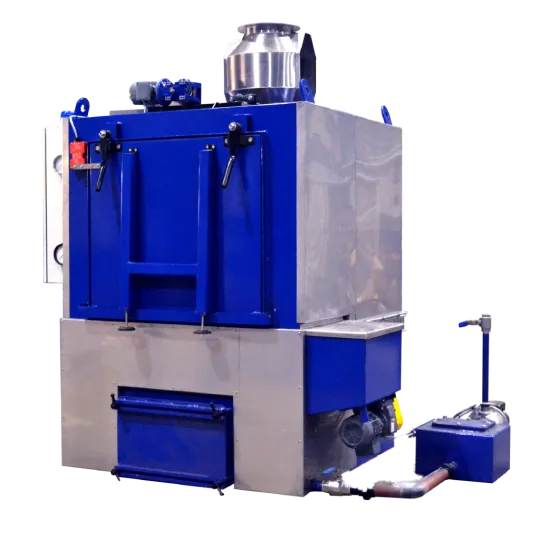
Single tank systems are the most basic setup, a single tank with basic heating that requires manual loading. The are useful in low volume applications and for simple parts, though they do deliver inconsistent result with no control over contamination.

Multi Stage Systems
Multi stage systems are the most commonly used across all industries. The typical layout consists of pre-wash, ultrasonic cleaning, rinse and drying with the optional drying stage for some customers. These systems provide a controlled cleaning process with consistent results.
Buy • Rent • Contract
Purchase

Rental

Contract Cleaning

FAQs
- What is ultrasonic cleaning and how does it work?
Ultrasonic cleaning uses high-frequency sound waves to generate cavitation within a liquid, creating microscopic bubbles that collapse and dislodge contamination. In engineered systems, this process is integrated with pre-wash and rinse stages to deliver consistent industrial cleaning results.
- Is ultrasonic cleaning suitable for industrial applications?
Yes, ultrasonic cleaning is widely used across industries such as automotive, aerospace, and manufacturing where precision cleaning is required. It is most effective when integrated into full systems such as those outlined here:
https://degreasingmachines.com/industrial-parts-washers-the-complete-guide/
- Can ultrasonic cleaning remove oil and grease effectively?
Yes, especially when combined with the correct cleaning chemistry and a pre-wash stage such as spray washing:
https://degreasingmachines.com/spray-washing/
This combination ensures both bulk and embedded contamination are removed.
- What types of contamination can ultrasonic cleaning remove?
Ultrasonic cleaning can remove oils, grease, carbon deposits, fine particulates, polishing compounds, and microscopic residues, including those trapped in internal features.
- Can ultrasonic cleaning reach internal passages and blind holes?
Yes, this is one of its key advantages. Cavitation allows cleaning to occur in areas that traditional spray systems cannot reach.
- Is ultrasonic cleaning better than spray washing?
They perform different roles. Spray washing removes heavy contamination, while ultrasonic cleaning removes fine and internal contamination. The most effective systems combine both processes.
- What industries benefit most from ultrasonic cleaning?
Industries such as aerospace, automotive, electronics, medical, and general manufacturing all benefit due to the precision cleaning required.
- Does ultrasonic cleaning damage parts?
No, when correctly specified. System design must consider frequency, power and material type to ensure safe operation.
- What frequency is best for ultrasonic cleaning?
It depends on the application. Lower frequencies are more aggressive, while higher frequencies are used for delicate parts.
- Is heating required in ultrasonic cleaning systems?
In many cases, yes. Heating improves chemical performance and accelerates the cleaning process.
- Why is pre-cleaning important before ultrasonic cleaning?
Pre-cleaning removes heavy contamination that would otherwise reduce cavitation efficiency. Without it, ultrasonic cleaning becomes less effective and slower.
- Do ultrasonic systems require rinsing stages?
Yes, rinsing removes cleaning chemicals and prevents contamination from redepositing on parts.
- What happens if parts are not dried properly?
Residual moisture can lead to corrosion, contamination, or failure in downstream processes such as coating or assembly.
- What drying methods are used after ultrasonic cleaning?
Common methods include hot air drying, vacuum drying, and in some cases ambient drying depending on application requirements.
- Can ultrasonic cleaning systems be automated?
Yes, full systems can include conveyors, automated loading, and PLC-controlled cycles for consistent performance.
- What affects ultrasonic cleaning performance?
Performance depends on frequency, power density, chemistry, temperature, contamination type, and system design.
- What is power density in ultrasonic cleaning?
Power density refers to the amount of ultrasonic energy applied per volume of liquid. It directly impacts cleaning strength.
- Why does filtration matter in ultrasonic systems?
Filtration removes contamination from the cleaning fluid, preventing recontamination and maintaining system efficiency.
- What happens without proper filtration?
Contaminants build up in the system, reducing cleaning effectiveness and increasing maintenance requirements.
- Can ultrasonic cleaning remove carbon deposits?
Yes, especially when combined with heat and appropriate cleaning chemistry.
- Is ultrasonic cleaning used in automotive manufacturing?
Yes, it is widely used for cleaning engine components, injectors, and machined parts.
- Can ultrasonic cleaning be used in aerospace?
Yes, it is essential for removing microscopic contamination and meeting strict quality standards.
- Is ultrasonic cleaning suitable for medical applications?
Yes, it is commonly used for cleaning surgical instruments and precision components.
- Can ultrasonic cleaning be used for electronics?
Yes, it is ideal for delicate components where traditional cleaning methods may cause damage.
- Should ultrasonic cleaning be used as a standalone system?
In most industrial applications, no. It should be part of a complete cleaning system including pre-wash, rinse, and drying stages.
- What is a multi-stage ultrasonic system?
A system that includes multiple tanks for cleaning, rinsing, and drying, providing a controlled and repeatable process.
- Why do standalone ultrasonic tanks often fail?
They lack pre-cleaning, filtration, and drying, leading to inconsistent results.
- How does system integration improve results?
Integration ensures each stage supports the next, improving efficiency and consistency.
Commercial Questions
- Can ultrasonic cleaning systems be rented?
Yes, rental options allow businesses to implement systems without large upfront investment.
- What is contract cleaning?
Contract cleaning allows companies to outsource cleaning processes rather than investing in equipment.
- When should a company buy a system instead of renting?
When cleaning demand is consistent and long-term, purchasing provides better control and cost efficiency.
- How long does ultrasonic cleaning take?
Cycle times vary depending on contamination and system design, typically ranging from minutes to longer for complex parts.
- Can multiple parts be cleaned at once?
Yes, batch cleaning is common in ultrasonic systems.
- Does ultrasonic cleaning require maintenance?
Yes, systems require regular maintenance including fluid management and filter replacement.
- Can ultrasonic cleaning remove polishing compounds?
Yes, it effectively removes fine residues from finishing processes.
- Can ultrasonic cleaning improve coating adhesion?
Yes, by removing microscopic contamination that would otherwise affect bonding.
- Is ultrasonic cleaning environmentally friendly?
It can be, particularly when using water-based systems and proper filtration.
- Can ultrasonic cleaning be used for stainless steel?
Yes, it is widely used for cleaning stainless components.
- Can aluminium parts be cleaned ultrasonically?
Yes, with the correct frequency and chemistry.
- Does ultrasonic cleaning remove bacteria?
It can assist in removing contaminants, but sterilisation may require additional processes.