The Complete Guide to
Industrial Parts Cleaning Systems
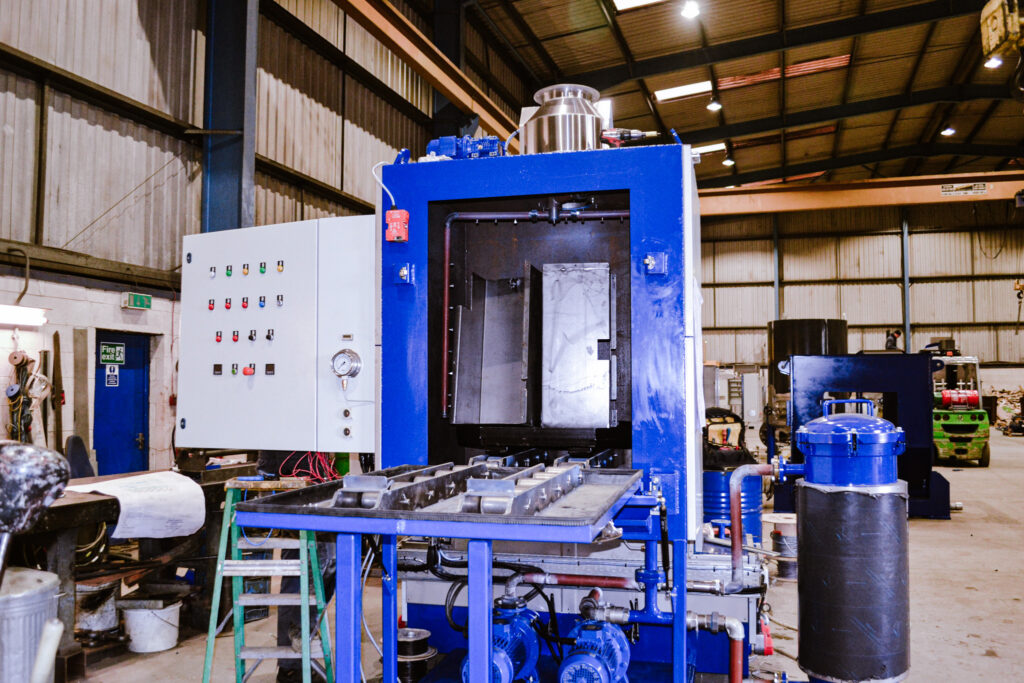
Industrial parts washers are essential machines within modern manufacturing environments where components must be cleaned of oils, machining fluids, metal particles and manufacturing residues before further production stages such as assembly, coating, inspection or packaging.
Rotajet Systems Ltd, a UK manufacturer of industrial cleaning machinery based in Wakefield, designs and supplies industrial parts washers and industrial degreasing machines used across global manufacturing industries. Rotajet cleaning systems are engineered for demanding production environments where reliable cleaning performance and process repeatability are critical.
This guide explains:
how industrial parts washers work
the technologies used in industrial degreasing systems
engineering design considerations
environmental and safety requirements
the industries where industrial cleaning systems are used
Table of Contents
Introduction to Industrial Parts Washers
An industrial parts washer is designed to remove contamination from components using controlled cleaning processes. These machines typically combine heated detergent solutions, high pressure spray washing and filtration technology to remove contamination effectively from component surfaces. Industrial parts washers therefore perform a vital role within modern manufacturing by ensuring that components meet strict cleanliness requirements before moving further through the production process.
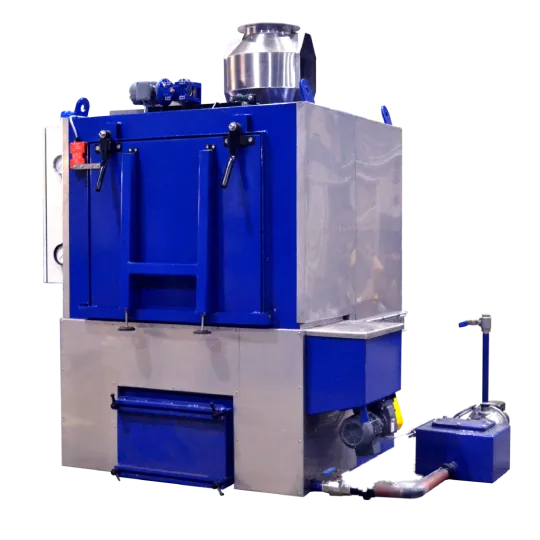
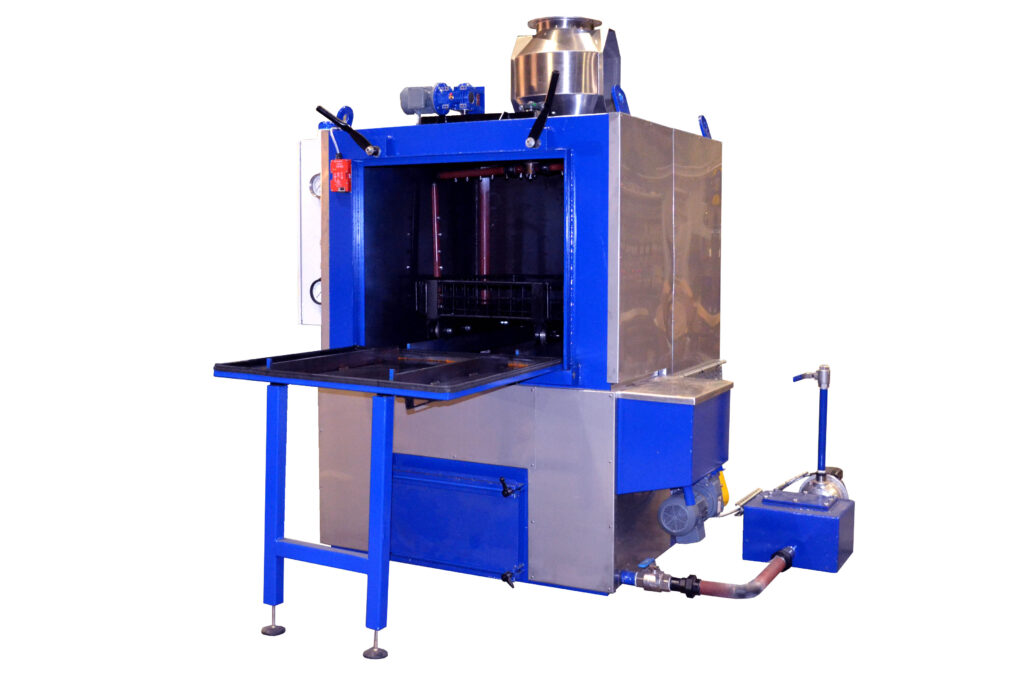
Rotajet manufactures a range of industrial cleaning equipment designed for different production environments. Each system is designed to suit different cleaning applications depending on component size, contamination level and production throughput.
Manufacturing processes generate contamination during machining and forming operations. Machining processes typically use oils and coolant fluids to lubricate cutting tools and reduce heat during metal cutting operations. Grinding processes generate fine metallic particles which may adhere to component surfaces.If these contaminants remain on components after machining they may cause several production problems.
Rotajet’s Industrial Parts Washers provide a reliable and repeatable method of removing contamination from components using automated cleaning cycles. By controlling cleaning temperature, detergent chemistry and spray pressure, manufacturers can ensure that components are cleaned effectively before moving to the next stage of production.
These machines use high-pressure pumps to circulate heated detergent solution through engineered spray nozzles located within the wash chamber.
During operation, the pump system draws detergent solution from the wash tank and forces it through spray nozzles which direct high-velocity jets of cleaning fluid onto the component surface.
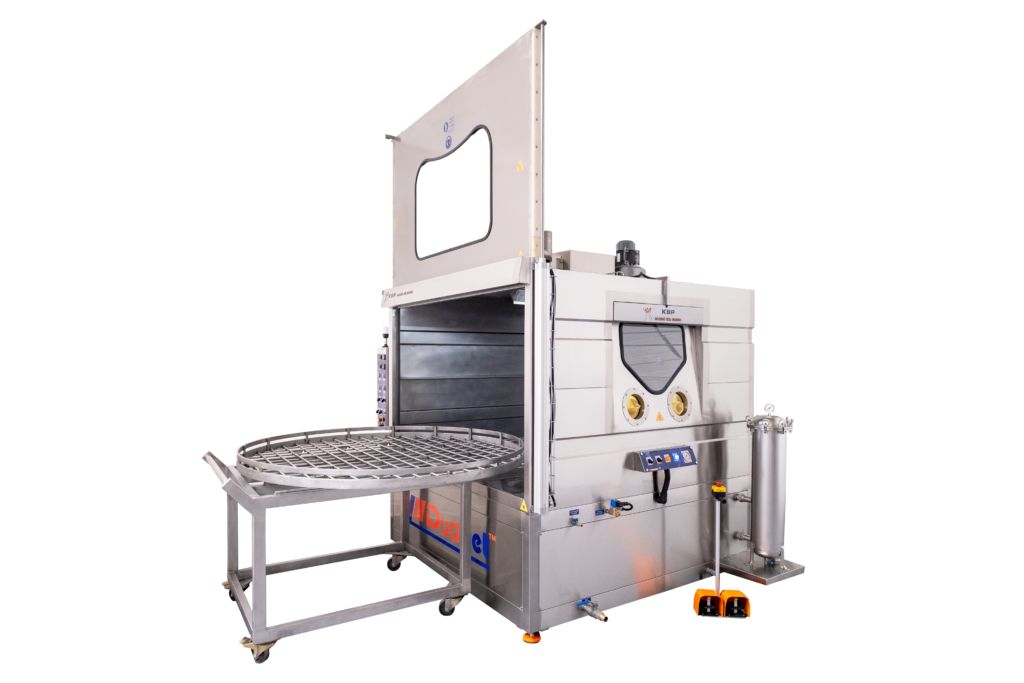
Rotary basket washers rotate components during the cleaning cycle so that all surfaces of the component are exposed to spray jets. This rotation improves cleaning effectiveness by ensuring that the cleaning fluid reaches every area of the component.
These machines are commonly used for cleaning machined components in engineering workshops.
Industrial Degreasing Technologies
Aqueous Degreasing
Aqueous cleaning systems use heated water-based detergents to dissolve oils and contamination. These systems are widely used because they provide lower environmental impact compared with solvent cleaning systems.
Solvent Degreasing
Solvent cleaning uses chemical solvents to dissolve oils and grease. However solvent use is increasingly regulated due to environmental and health considerations. Guidance regarding solvent safety is available from the UK Health and Safety Executive:
Industrial cleaning effectiveness depends not only on the detergent chemistry used, but also on the mechanical force applied to the component during the cleaning process. In many industrial cleaning applications, the removal of oils, machining fluids and particulate contamination requires a combination of chemical action and mechanical force. Industrial parts washers generate mechanical cleaning energy through several mechanisms.
Spray Impact Force
High-pressure pumps circulate heated detergent solution through engineered spray nozzles positioned throughout the wash chamber. These nozzles generate high-velocity jets of cleaning fluid which impact the component surface and dislodge oils, coolant fluids and particulate contamination.
The effectiveness of spray cleaning depends heavily on the pressure, flow rate and nozzle configuration used within the cleaning system. Higher pump pressures increase the mechanical impact force delivered by the spray jets, allowing the system to remove heavier contamination such as grease or baked-on oils.
Turbulent Fluid Flow
As cleaning fluid circulates through the wash chamber it creates turbulence around the components being cleaned. This turbulence improves the ability of the detergent solution to penetrate small cavities, threaded holes and complex component geometries.
Turbulent flow also helps transport contamination away from the component surface once it has been loosened by the cleaning process, moving it towards the filtration system.
Ultrasonic Cavitation
Ultrasonic frequencies can be used to generate cavitation bubbles in the cleaning fluid. These microscopic bubbles collapse near the surface of the component, releasing small bursts of energy which dislodge contamination.
Ultrasonic cleaning is particularly useful for precision components with complex geometries where traditional spray cleaning may not reach all surfaces. The cavitation process allows contamination to be removed from very small features and internal cavities.
Industrial Parts Washing Process
Loading Stage
In batch cleaning systems, components are typically placed inside baskets or fixtures which are positioned within the wash chamber. In continuous washing systems, components may be transported through the machine on conveyor systems.
Heated Wash Stage
During the wash stage, detergent solution within the wash tank is heated to an optimal temperature. Heating the cleaning fluid improves the effectiveness of the detergent by reducing the viscosity of oils and increasing the rate at which contaminants dissolve.
Spray Cleaning
Once the cleaning fluid has reached the correct temperature, high-pressure pumps deliver detergent solution through spray nozzles located throughout the wash chamber.
Rinse Stage
After the wash stage is complete, components are typically rinsed using fresh water to remove detergent residues. In some systems rinse water is filtered and reused to reduce water consumption.
Drying Stage
Drying systems remove moisture from the components before they leave the machine. Drying methods may include hot air blowers, air knives or vacuum drying systems depending on the type of components being cleaned.
Filtration Systems Industrial Cleaning
Filtration systems are a critical component of industrial parts washers because they maintain the quality of the wash fluid throughout the cleaning process. Without filtration this contamination would accumulate in the wash tank and reduce cleaning effectiveness. Industrial filtration systems maintain the wash fluid so that the cleaning solution can be reused effectively.
Closed Loop Filtration
Closed-loop filtration systems allow cleaning fluid to be filtered and reused repeatedly within the cleaning machine. These systems reduce water consumption and minimise wastewater discharge, making them more environmentally sustainable.
Bag and Cartridge Filters
Bag filters and cartridge filters are commonly used to remove solid particles from cleaning fluid. These filters trap debris within filter media while allowing the cleaning fluid to pass through. Filters are typically installed within the fluid circulation system so that contamination is removed continuously during machine operation.
Oil Separation Systems
Many industrial cleaning applications involve oils and lubricants which float on the surface of the wash fluid. Oil separation systems remove these oils using skimmers or coalescing separators. Removing oil contamination improves detergent performance and extends the life of the cleaning fluid.
Engineering Design of Industrial Parts Washers
Machine Construction
Rotajet industrial cleaning systems are constructed from stainless steel to resist corrosion and withstand continuous exposure to heated detergent solutions. Stainless steel construction also ensures long service life and structural strength.
Pump Systems
High-pressure pumps circulate cleaning fluid through the spray system and generate the mechanical energy required for effective cleaning. Pump capacity determines the pressure and flow rate delivered to the spray nozzles, which directly affects cleaning performance.
Heating Systems
Heating systems maintain the cleaning fluid at the required temperature throughout the cleaning cycle. Electric heaters or steam heat exchangers are commonly used depending on the facility infrastructure.
Fluid Management
Fluid management systems control the circulation, filtration and reuse of cleaning fluid within the machine. These systems include filtration units, oil separators and overflow systems which maintain wash fluid quality.
Technical Specification Guide for Industrial Parts Washers
Industrial parts washers are designed in many different configurations depending on the size of components, contamination levels and production throughput requirements. While the exact specification of each system varies depending on the application, several key engineering parameters are commonly used when specifying industrial cleaning equipment.
Parameter
Typical Range
Cleaning Temperature
40°C – 80°C
Pump Pressure
2 – 10 bar
Pump Flow Rate
50 – 400 L/min
Tank Capacity
200 – 2000 litres
Construction
Stainless Steel
Heating System
Electric or Steam
Drying System
Hot Air / Air Knife
Industrial Parts Washer Selection Guide
Selecting the correct industrial parts washer requires understanding several technical factors related to the manufacturing process. Industrial cleaning systems must be designed to match the contamination type, component geometry and production throughput requirements of the facility. The key factors to bear in mind are the type of contamination, the geometry of the components being washed and the throughput requirements.
Batch vs Continuous Industrial Parts Washing Systems
Batch Cleaning Systems
Batch washers are widely used in engineering workshops and manufacturing environments where production volumes are moderate and components are cleaned in groups.
Rotajet manufactures several batch cleaning machines including the D-Series spray washer. Components are loaded into baskets or fixtures and placed inside the wash chamber where the cleaning process takes place.
Continuous Cleaning Systems
Continuous Systems are commonly used in high-volume manufacturing environments such as automotive production facilities.
Components move through the cleaning system on a conveyor rather than being cleaned inside a fixed chamber.
Industrial Cleaning Systems from Rotajet
Rotajet Systems Ltd designs and manufactures industrial cleaning equipment in Wakefield, United Kingdom. Rotajet machines are used across global manufacturing industries where reliable industrial cleaning performance is required.
Rotajet equipment supports industries including aerospace manufacturing, automotive engineering, defence production and precision machining.
An industrial parts washer is a machine designed to remove oils, grease, machining fluids and particulate contamination from manufactured components using heated detergents, spray cleaning systems and filtration technology.
Industrial parts washers are widely used in aerospace manufacturing, automotive production, defence engineering, railway maintenance and precision engineering industries.
Industrial parts washers remove machining oils, coolant fluids, grease, grinding debris, swarf particles and manufacturing residues from component surfaces.
Article Schema
Organisation Schema
This website uses cookies to improve your experience. We'll assume you're ok with this, but you can opt-out if you wish.AcceptRejectRead More
Privacy & Cookies Policy
Privacy Overview
This website uses cookies to improve your experience while you navigate through the website. Out of these, the cookies that are categorized as necessary are stored on your browser as they are essential for the working of basic functionalities of the website. We also use third-party cookies that help us analyze and understand how you use this website. These cookies will be stored in your browser only with your consent. You also have the option to opt-out of these cookies. But opting out of some of these cookies may affect your browsing experience.
Necessary cookies are absolutely essential for the website to function properly. This category only includes cookies that ensures basic functionalities and security features of the website. These cookies do not store any personal information.
Any cookies that may not be particularly necessary for the website to function and is used specifically to collect user personal data via analytics, ads, other embedded contents are termed as non-necessary cookies. It is mandatory to procure user consent prior to running these cookies on your website.