

Improving Dewatering Efficiency and Material Recovery
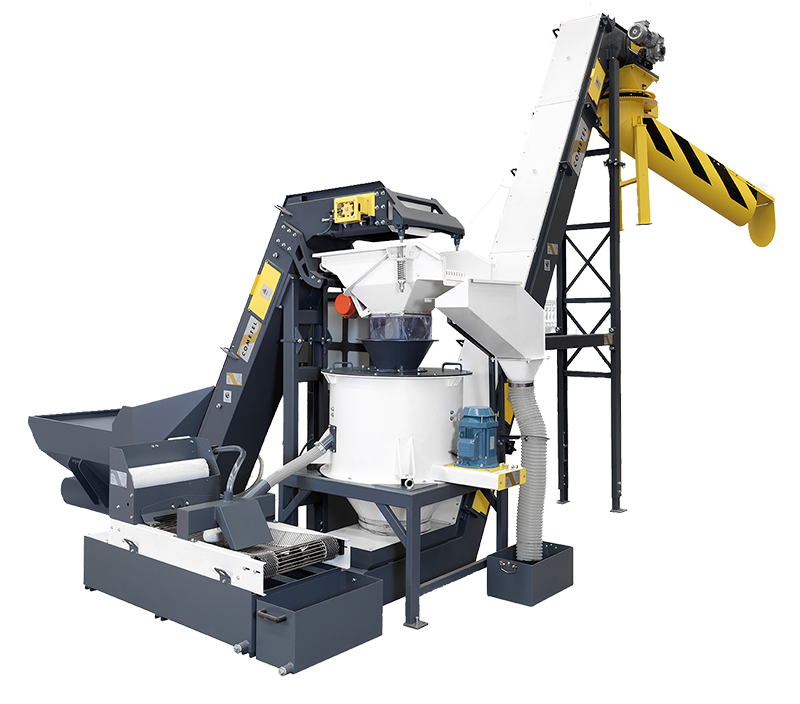
Across modern manufacturing and recycling operations, efficient liquid separation is becoming increasingly important. Rising disposal costs, increasing recycling targets and growing pressure to improve process efficiency are driving businesses to look for technologies that can maximise material recovery while reducing operational expenses. One of the most effective solutions available is the industrial centrifuge.
By using centrifugal force to separate liquids from solids, a centrifuge can significantly reduce moisture content, improve material quality and prepare products for further processing. From recycling facilities and metal processors to plastics manufacturers and waste recovery operations, centrifuge technology is helping businesses achieve greater productivity and profitability.
What Is a Centrifuge?
A centrifuge is a machine that rotates materials at high speed to generate centrifugal force. This force pushes liquids away from solid materials, allowing them to be separated quickly and efficiently.
Unlike traditional drainage methods, which rely on gravity and can take significant time, a centrifuge provides rapid and consistent separation. The result is a drier product, reduced handling requirements and improved process performance.
Industrial centrifuges are commonly used for dewatering, drying, liquid recovery and material preparation applications where moisture reduction is critical.
Why Dewatering Matters
Excess moisture can create a range of challenges within manufacturing and recycling environments. Wet materials are heavier to transport, more difficult to process and often less valuable when sold for recycling or reuse.
Implementing a centrifuge within a production line can help businesses address these issues by reducing retained liquids and improving overall material quality.
The benefits often include:
• Reduced moisture content
• Lower transportation costs
• Improved recycling value
• Reduced waste disposal requirements
• Enhanced downstream processing
• Faster drying times
• Improved product consistency
By removing as much liquid as possible before secondary processing, businesses can significantly improve operational efficiency throughout the production chain.
Centrifuges for Plastic Recycling
Within plastic recycling operations, a centrifuge plays a vital role in preparing washed plastic flakes for final drying and extrusion.
Following washing processes, plastic materials typically retain significant amounts of surface moisture. If not removed effectively, this moisture can reduce extrusion efficiency and negatively affect pellet quality.
A high-speed centrifuge removes large volumes of water from the material stream, reducing the load placed on thermal drying systems and lowering overall energy consumption. This makes the centrifuge an essential component within many modern plastic washing lines.
For recyclers processing HDPE, LDPE, PP and other rigid plastics, effective centrifugal drying can contribute to higher throughput and improved product quality.
Centrifuges for Metal Swarf Processing
Industrial centrifuges are also widely used within metal recycling and machining operations.
Freshly machined swarf often contains residual oils, coolants and process fluids. Recovering these liquids not only improves the quality of the metal scrap but can also reduce waste disposal costs and support fluid recovery initiatives.
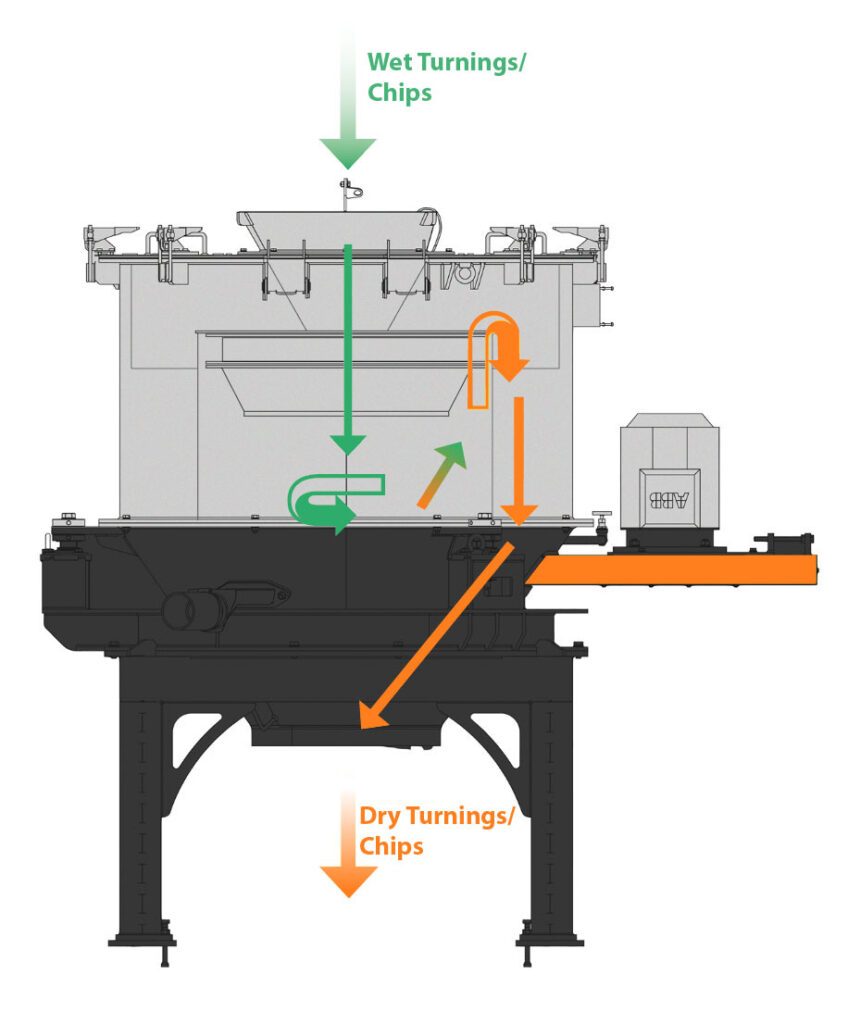
A centrifuge can rapidly separate liquids from metal turnings, chips and swarf, producing cleaner material suitable for recycling, briquetting or further treatment.
Materials commonly processed include:
- Steel turnings
- Stainless steel
- Aluminium
- Titanium
- Nickel alloys
- Copper
- Brass
- Inconel®
For manufacturers processing high-value materials, the use of a centrifuge can help maximise recovery value while supporting more sustainable operations.
Improving Sustainability with Centrifuge Technology
Sustainability remains a major priority across manufacturing and recycling industries. Businesses are increasingly seeking methods to reduce waste, recover valuable resources and minimise environmental impact.
A centrifuge supports these objectives by:
• Recovering reusable liquids
• Reducing waste volumes
• Improving recycling efficiency
• Lowering transportation requirements
• Supporting circular economy initiatives
• Reducing energy consumption in downstream drying processes
These benefits can help organisations improve both environmental performance and operational profitability.
Choosing the Right Centrifuge
Selecting the correct centrifuge depends on several factors, including material type, throughput requirements, moisture levels and desired final product quality.
Considerations may include:
• Feed material characteristics
• Required throughput
• Particle size
• Moisture reduction targets
• Integration with existing equipment
• Maintenance requirements
Every application is different, which is why material testing is often the most effective way to determine the optimum solution.
Free Material Trials
At Rotajet Systems, we understand that every application presents unique challenges. Our engineering team offers free material trials to assess the performance of our centrifuge technology using your specific product.
During testing, we can evaluate:
• Dewatering performance
• Moisture reduction levels
• Throughput capabilities
• Equipment suitability
• Potential process improvements
By testing representative samples, businesses can gain confidence in the expected results before investing in new equipment.